


INDEPENDENT SPIRIT. DISTINCTIVE DESIGN.
Inspired by watchmaking culture and expressed through original design, LOEMEY seeks a balance between the spirit of traditional craftsmanship and contemporary aesthetics, creating timepieces distinguished by refined quality and distinctive character.
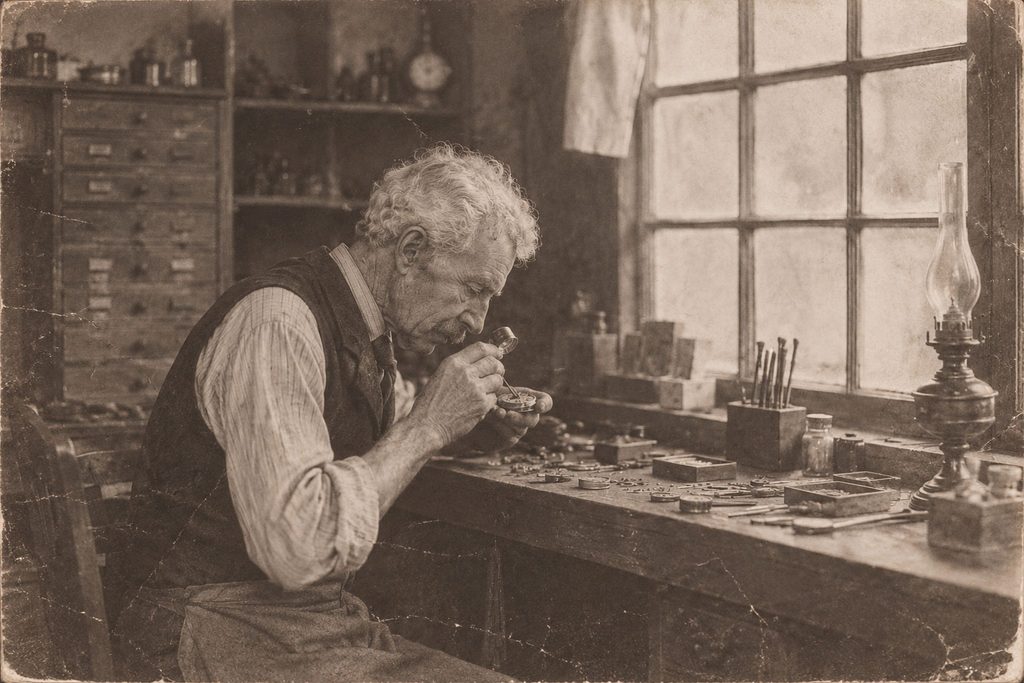
Loévin Meyer
Circa 1828–1917
LOÉVIN MEYER
THE STORY OF AN INDEPENDENT WATCHMAKER
Circa 1828–1917
Loévin Meyer was a Swiss watchmaker who began his journey as an apprentice before gradually establishing himself as an independent craftsman and founding his own watchmaking workshop. At a time when mechanical watchmaking was becoming increasingly specialised and industrialised, he remained committed to independent thinking, with a particular focus on mechanical construction, craftsmanship and the quality of each timepiece. In 1917, his eldest son, Émile Meyer, formally adopted the name LOEMEY in his father’s honour, making a watchmaker’s name the starting point of a new chapter in the family’s watchmaking legacy.
01 | FROM APPRENTICE TO WATCHMAKER
In the Swiss Jura Mountains of the nineteenth century, winter arrived early. Cold winds swept through the valleys, and the windows of the workshops were often chilled by the cold. For Loévin, who came from a modest family, learning a skilled trade seemed the most practical way to change the course of his life.
As a boy, he apprenticed under a local watchmaker, learning the craft of watch repair. At first, his tasks were modest: organising tools, cleaning components and identifying gears. He carefully completed whatever work his master assigned. Yet Loévin had a habit that set him apart from the other apprentices. Each evening, after the others had put away their tools and left, he would remain a little longer. Even if it meant simply finding out why a gear would not turn smoothly, he was willing to pick up his tools again and examine it once more.
One bitter winter day, the fire in the workshop gradually died down, and everyone else had already gone home. Loévin’s fingers were red from the cold, yet he remained bent over the workbench, trying to adjust a component that refused to fit properly.
When his master returned to collect something, he found the boy still there. “Leave it until tomorrow. It’s getting late.” Loévin looked at the component in his hand and replied, “I want to try one more time.” He did not fully solve the problem that evening, but he remembered why his attempt had failed. The following day, he returned to the workbench.
While others learned how to complete the tasks assigned by their master, Loévin began to ask a different question: Why couldn’t it be done better?
This determination never to give up easily became the defining quality of his early years as a watchmaker.
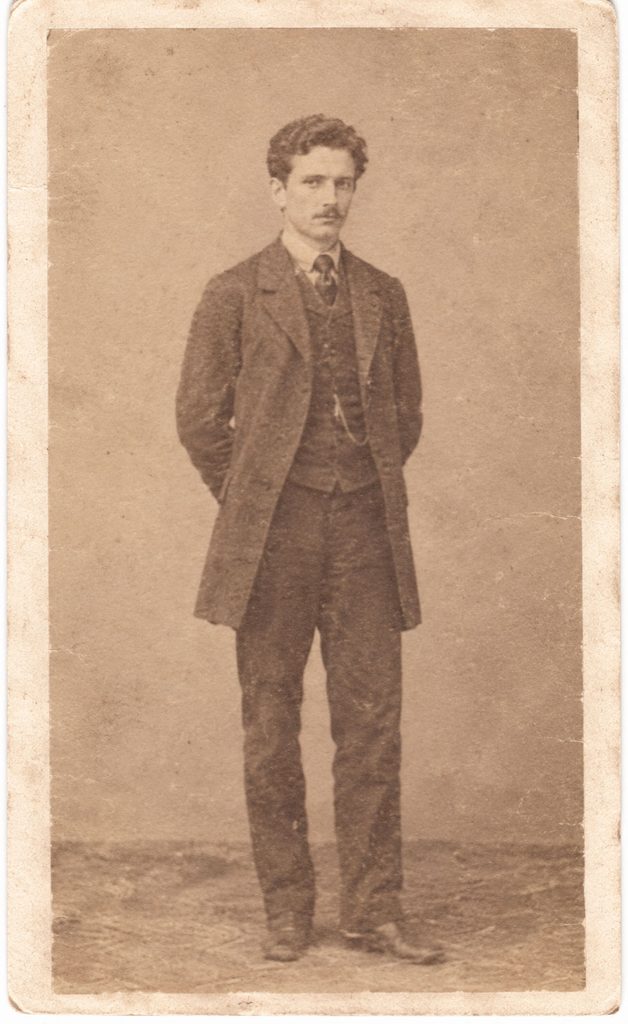
Loévin Meyer
— Artistic Reconstruction ·
Circa 1860
02 | FINDING ANSWERS IN MECHANICS
It was an old pocket watch that several watchmakers had already refused to repair. It had been stopped for years, its movement was severely worn, and several essential components no longer worked in harmony. Some had examined it and shaken their heads; others had advised its owner not to waste any more time. “I’m afraid this watch cannot be repaired.” Yet its owner was unwilling to give up. After several attempts elsewhere, he eventually brought it to the young Loévin.
Loévin opened the case, removed the movement and carefully examined each component. “They all said it couldn’t be repaired,” the owner reminded him. Loévin did not answer immediately. He simply raised his magnifying glass and began to inspect the mechanism. After a while, he said, “Let me try.” He discovered that the problem was not caused by a single irreparably damaged component. Rather, several small areas of wear had accumulated, disrupting the operation of the entire movement.
With no suitable replacement parts available, he set about restoring the components himself. If one attempt failed, he tried again. If the movement still did not run smoothly after assembly, he took it apart and examined it once more. Night fell, yet the light continued to shine over his workbench. He carried on the next day, and the day after that. Then, one evening, after countless adjustments, the movement finally began to run.
Tick, tock. The long-silent sound once again came from the pocket watch. Loévin did not immediately return it to its owner. He continued to observe and regulate the movement until he was certain that it was keeping time consistently. When the owner finally received the watch, he could hardly believe that it was running again.
Where others saw an old watch beyond repair, Loévin saw a problem whose answer had yet to be found.
He began to understand that true watchmaking ability was not simply a matter of using tools skillfully. It also required independent judgement and the courage to persevere in the face of difficulty.
03 | MAKING EVERY TIMEPIECE TO HIS OWN STANDARDS
After establishing his own workshop, Loévin began accepting watchmaking commissions from a variety of clients. On one occasion, he received an order for a batch of timepieces. The client specified only basic requirements for appearance and function, leaving the movement and internal materials to the watchmaker’s discretion. According to common market practices at the time, lower-cost materials and more economical movement solutions could easily have been used. The finished watches would still have functioned properly, while the workshop would have earned a greater profit.
Some suggested that he take this approach, but Loévin declined. He carefully inspected the materials prepared for the order, reviewed the movement construction and component specifications, and ultimately decided to complete the work according to the higher standards he believed appropriate. Someone asked him in puzzlement, “The client never asked for this. Why spend more?”
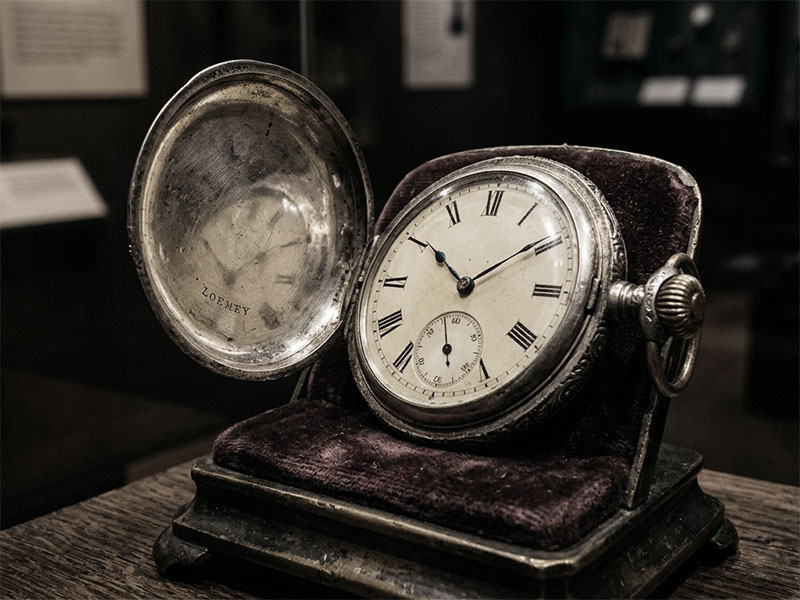
The LOEMEY personal maker’s mark on a pocket watch, circa 1880. Photograph of the original timepiece.
Loévin paused for a moment, picked up a movement that had not yet been fully assembled and gently placed it in his palm. “Because a timepiece is more than something that tells people the time.” Looking at the tiny gears, he continued, “Every timepiece has a life of its own. Each of its components deserves to be treated with respect. Even if no one can see what lies inside, that is no reason to lower our standards.”
In his view, the value of a watch was not defined by its appearance alone, nor solely by its ability to keep accurate time. The components hidden beneath the dial were equally essential to its quality and character. He would rather earn less than deliver a piece made with materials or craftsmanship that did not meet his own standards.
This conviction gradually became Loévin’s guiding principle in watchmaking. He firmly believed that a true watchmaker must be responsible not only for the parts visible to the client, but also for every detail that remains unseen.
During the years he operated his own workshop, Loévin had already begun engraving “LOEMEY” on the movements or inside of the cases of his timepieces to identify and distinguish his work. This practice made his creations recognisable and reflected both his confidence in his craftsmanship and his sense of responsibility for the quality of every piece.
For the quality of a timepiece should never depend on whether others can see it, but on the standards set by the watchmaker himself.
04 | PASSING THE SPIRIT OF WATCHMAKING TO THE NEXT GENERATION
Loévin and his wife, Élise Aubert, had three children:
Their eldest son, Émile Meyer; their daughter, Madeleine Meyer; and their youngest son, Paul Meyer.
In his spare time, Loévin often welcomed the children into his workshop. They were fascinated by the intricate components. To their young eyes, gears, springs and balance wheels seemed like a set of mechanical toys, capable of endless variations.
One day, while their father was away, the children took several gears to one side and tried to assemble a small mechanism that could turn on its own. The gears did not move as they had expected, and the workbench was left in disarray.
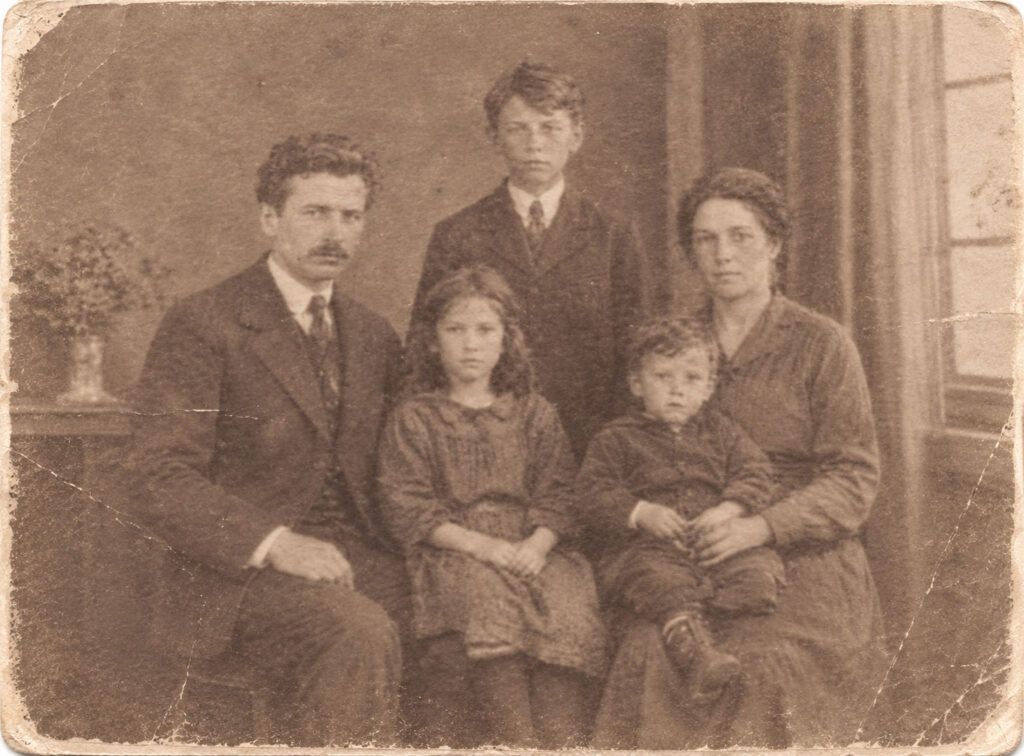
Meyer Family Portrait · Circa 1881
Artistic Reconstruction
From left to right: Loévin Meyer, his daughter Madeleine, his eldest son Émile, his wife Élise and his youngest son Paul.
When Loévin returned, he did not scold them. Instead, he gathered the scattered gears, placed them neatly on the table and asked, “Why do you think it won’t turn?” The children could not explain. Rather than completing the mechanism for them, he picked up two gears and slowly demonstrated how they engaged and transferred motion, allowing the children to observe and experiment for themselves. He wanted them to understand that watchmaking required more than skilled hands; it also demanded the ability to think independently.
When faced with a problem, do not rush to accept an answer already given. Seek to understand it, then find your own way to a solution.
This was the approach Loévin upheld throughout his life.
05 | A CHANGING ERA, AN UNWAVERING COMMITMENT TO HIS CRAFT
During the second half of the nineteenth century, the Swiss watchmaking industry was undergoing profound change. Machinery continued to advance, component manufacturing became increasingly standardised, and more timepieces began to be produced on an industrial scale. Traditional methods, which had long relied on individual craftsmanship and family workshops, were facing unprecedented challenges.
Loévin felt these changes as well. In the past, a watchmaker could accomplish much through skilled hands and years of experience. Now, machines could manufacture components more quickly, while factories could produce large quantities of movements at lower cost. For a small independent workshop, competition was becoming increasingly difficult.
His eldest son, Émile, saw things differently. To the younger Émile, his father was still spending too much time on repairs and adjustments, unwilling to move beyond familiar working methods. Times had changed, and the watchmaking industry needed new approaches as well as greater room for growth.
Their differing views occasionally led to disagreements.
“How far can the workshop go if we continue doing things this way?” When faced with his son’s question, Loévin did not argue. He simply picked up a movement from the workbench and carefully examined its gears. “Methods can change, but we must never become so focused on working faster that we forget why we should do the work well in the first place.” Perhaps these words best expressed the principle he upheld throughout his life.
The private watchmaking workshop of the Meyer family. Pocket watches, disassembled movements, gears and precision watchmaking tools rest on the wooden workbench, reflecting the watchmaker’s daily dedication and craftsmanship.
Historical Scene Artistic Reconstruction
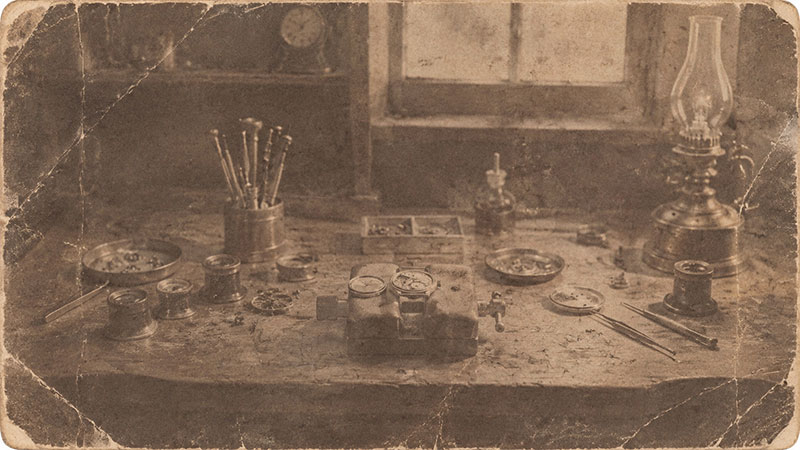
Loévin Meyer’s Watchmaking Workbench · Circa 1900
Historical Scene · Artistic Reconstruction
Loévin was not someone who rejected change. He was willing to learn to use new tools and adapt his working methods to practical circumstances. Yet in his view, no matter how much the times progressed, a watchmaker should always remain responsible for the work he created.
In time, Émile chose his own path, gradually moving towards movement manufacturing and business management. Loévin, meanwhile, remained at his familiar workbench, continuing to do what he believed was worth doing.
Father and son made different choices, yet neither left the world of watchmaking.
One sought to expand the scale of the watchmaking business; the other remained committed to caring for every timepiece that passed through his hands. Loévin may not have chosen the faster path, but he never lost sight of why he had begun.
06 | HANDS MAY SLOW, BUT THE ORIGINAL CONVICTION REMAINS
The passing years gradually left their mark on Loévin. His once nimble hands began to move more slowly, and familiar tasks took longer to complete. His hair turned increasingly grey, while his frame remained slender. Years spent leaning over the workbench had left his back slightly stooped.
His family encouraged him to slow down and spare himself the effort he had once devoted to his work. Yet whenever he came to the workbench, he would instinctively reach for his tools, inspect components and observe the movement in operation. He remained fascinated by different mechanical structures, the relationships between individual components and the fine adjustments needed to complete a timepiece.
For Loévin, watchmaking had long since become more than a profession. It was the first craft he had learned as a young boy, the means by which he supported his family, and a way of life that had accompanied him throughout his years.
Historical design archives from the Meyer family’s watchmaking workshop, documenting designs for pocket-watch cases, enamel dials, mechanical movements and precision components. The yellowed drawings and handwritten French annotations bear witness to the Meyer family’s exploration of and commitment to traditional Swiss watchmaking craftsmanship.
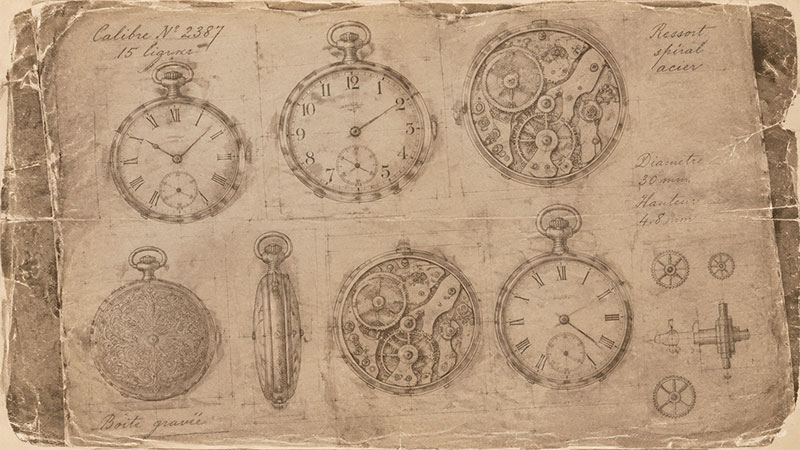
Meyer Family Watchmaking Design Sketches · Circa 1900
Historical Archive Artistic Reconstruction
Historical Archive Artistic Reconstruction
The light outside gradually faded, while the tools on the workbench remained neatly arranged. Loévin put down the component in his hand, rested for a moment, then picked up his magnifying glass again. He left behind no grand declarations, nor did he seek to prove his convictions to others. As long as he could still sit at his workbench, he was willing to carry on.
This was how he understood the world, and how he lived alongside time.
In 1917, Loévin Meyer reached the end of his life at the approximate age of 89. He left behind neither a vast factory nor a celebrated business empire. Yet he had devoted his entire life to watchmaking. From exploring mechanical principles to designing and refining every movement, he approached each creation according to his own standards. What he left behind was not only the skill and experience of a watchmaker, but also a spirit of independent creation and an unwavering commitment to quality.
For him, watchmaking had never been merely about creating an instrument to measure time. It was about giving time the mark of craftsmanship through a lifetime of dedication.
07 | A NAME, A LEGACY
After his father’s passing, Émile came to understand more deeply the convictions that had guided Loévin throughout his life. In his youth, he had struggled to understand why his father was so devoted to every detail of watchmaking. It was only after entering the world of watch manufacturing and business himself that he gradually came to appreciate what lay behind his father’s painstaking attention and pursuit of perfection: a profound respect for the craft of watchmaking and a sense of responsibility for every creation.
In 1917, in honour of his father, Loévin Meyer, Émile incorporated his name into the brand identity and formally adopted the name LOEMEY. The personal mark once engraved on timepieces thus became the starting point of a new chapter in the family’s watchmaking legacy.
Loévin had spent his life upholding his own standards of watchmaking. Through the name LOEMEY, Émile carried that commitment forward.
True inheritance is not simply the continuation of a business. It is the understanding and preservation of the original convictions behind it.
A NAME WAS GIVEN LASTING MEANING.
AND A SPIRIT WAS CARRIED FORWARD.