


Keywords: Swiss Watchmaking, Watch Design, Mechanical Watches, Original Design
A timepiece does more than tell the time. It reflects the technology, aesthetics and way of life of the era in which it was created.
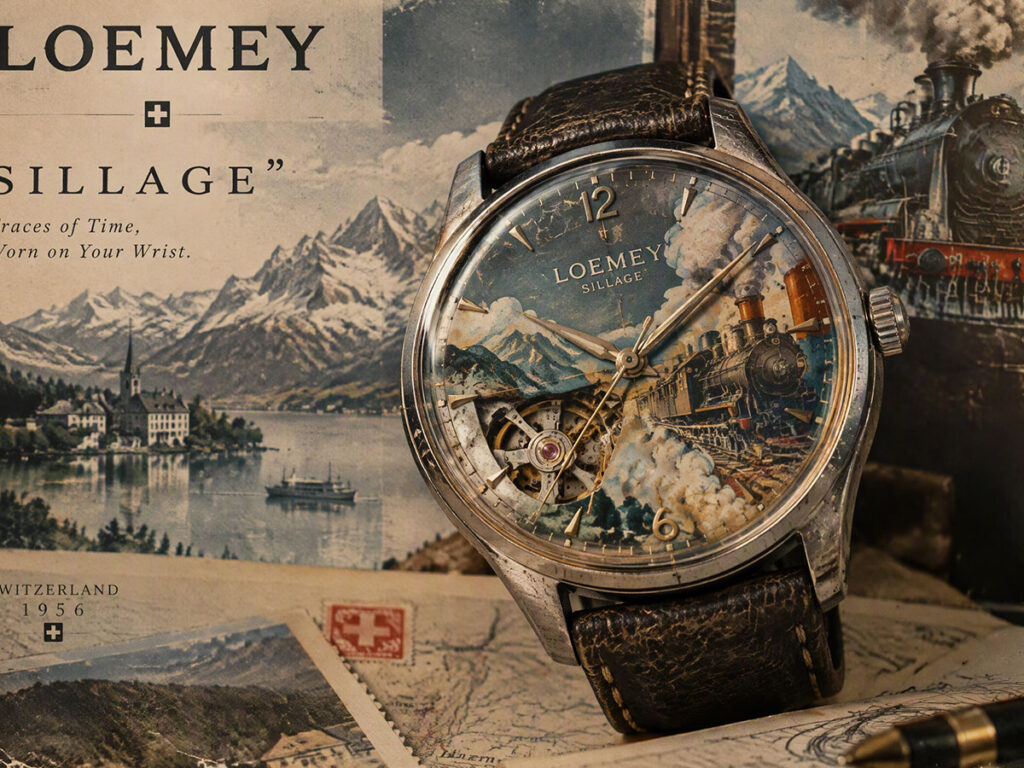
Founded in 1917, Swiss watchmaking brand LOEMEY has spent more than a century exploring mechanical construction, timekeeping functions and watch design. From early medical timing watches and mechanical chronographs to timepieces inspired by polar exploration and space exploration, the brand’s history reveals a distinctive design journey shaped by the spirit of different eras.
In 1917, LOEMEY founder Loévin Meyer established a watchmaking workshop in Le Sentier, Vallée de Joux, in the Swiss canton of Vaud. In its early years, the workshop focused on watch repairs, pocket-watch making and bespoke commissions, while exploring new possibilities for wristwatch design in different environments.
In the same year, LOEMEY developed the POULS medical timing watch in response to the needs of medical professionals measuring the pulse. Featuring a central seconds hand and a pulsation scale, the watch offered a clear and intuitive way to measure pulse rates.
In 1918, the brand further explored ways to protect the watch crystal with the CAPOT hinged-cover watch. Inspired by the metal covers commonly found on pocket watches, the design incorporated a protective metal cover into the wristwatch case. A side-mounted hinge and a separate metal cover made protection an integral part of the watch’s overall design.
In 1924, LOEMEY introduced the MÉRIDIEN chronograph. Equipped with a 30-minute counter, the watch featured a design developed around a lever escapement and rectangular and oval movement configurations, marking a further step in the brand’s exploration of its own wristwatch designs.
As times changed, LOEMEY continued to broaden its design horizons.
In 1926, the ALTÉRAN exploration watch drew inspiration from polar expeditions. Its high-contrast dial, Arabic numerals, luminous hands and 24-hour scale were designed to make time easier to read in demanding environments.
In 1949, the HÉRITAGE triple-register chronograph with full calendar combined mechanical chronograph functions with calendar indications. Its layout integrated small seconds, chronograph displays, and day, date and month indications, demonstrating the brand’s exploration of complex mechanical functions.
In 1956, LOEMEY introduced the SILLAGE watch, bringing together the lines of industrial architecture, the rhythm of mechanical movement and visual elements inspired by the Steam Age in its dial design.
With the arrival of the Space Age, LOEMEY turned its attention towards the universe. The orbital-themed watch of 1961 centred on a 24-hour display, while the 1969 ASTRAL LUNAIRE drew inspiration from the lunar surface, the phases of the Moon and space exploration, incorporating lunar textures into the watch dial.
From medical timing and mechanical chronographs to polar exploration and space-inspired designs, LOEMEY’s historical creations reflect the brand’s continued interest in the technological demands and aesthetic directions of different eras.
Today, LOEMEY is revisiting its historical design archives and drawing on the heritage of traditional watchmaking to explore the relationship between classic mechanical timepieces and contemporary design.
At LOEMEY, we believe that meaningful design is not simply about repeating the past. It is about understanding tradition and, from that foundation, developing an expression of its own.